

Effective second quarter tax planning gives you time to adjust your strategy before year-end deadlines limit your options. Acting early allows you to reduce tax liability, improve cash flow, and align financial decisions with your long-term goals.
Review Your Tax Return and Take Action
Filing your return should trigger analysis, not amnesia. A strong second quarter tax strategy starts with reviewing what just happened.
Your most recent return highlights where planning opportunities exist:
- Unexpected tax liability
- Missed deductions or credits
- Income shifts that impact future strategy
Second quarter is the time to translate those insights into action while there’s still runway left in the year.
To build on other tax planning opportunities earlier in the year, read what first quarter moves matter most.
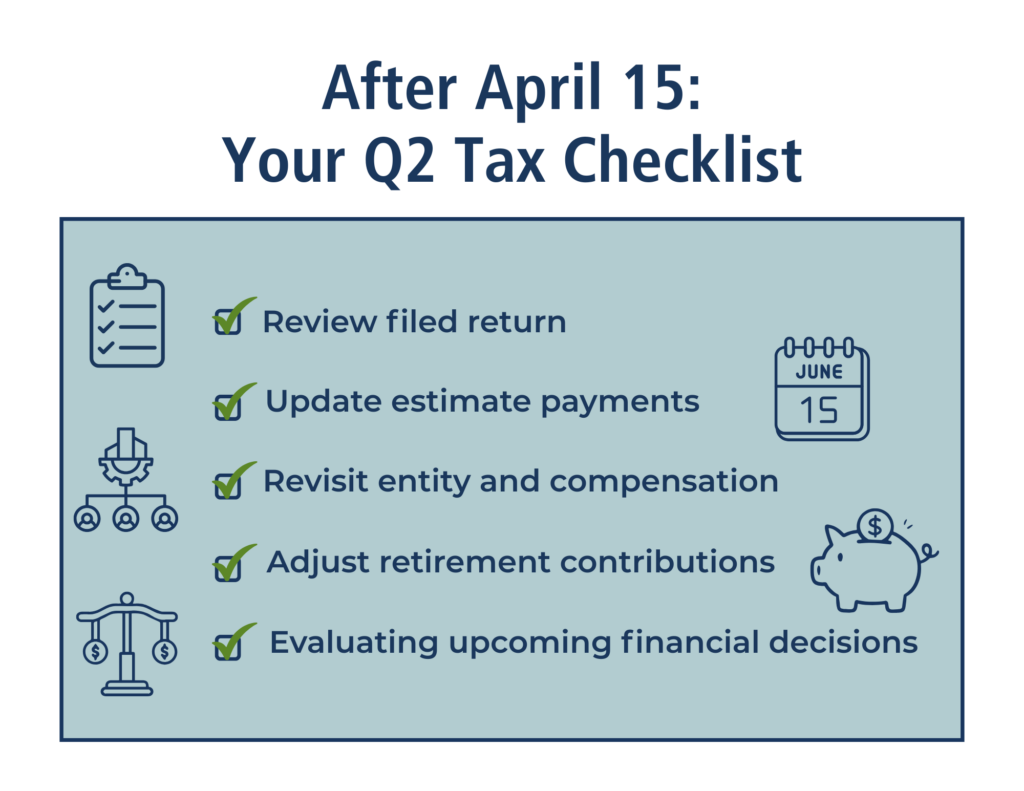
Adjust Estimated Tax Payments Before June 15
A key part of second quarter tax planning is revisiting your estimated payments before the June 15 deadline.
Now is the time to:
- Reforecast income based on current trends
- Avoid underpayment penalties (IRS estimated taxes guide)
- Improve cash flow by aligning payments with reality
Early adjustments give you control. Waiting limits flexibility.
Optimize Your Business Structure and Compensation
For business owners, second quarter is a critical window for structural decisions.
Evaluate:
- Whether your entity structure is still tax-efficient
- Your salary vs. distribution mix
- Opportunities to better align income with tax strategy
These changes take time to implement. Starting now helps ensure they benefit this year, not next.
Align Retirement Contributions with Tax Strategy
Retirement planning is one of the most effective tools in second quarter tax planning.
Use Q2 to:
- Revisit contribution targets
- Evaluate options like 401(k)s, SEP-IRAs, or cash balance plans
- Align contributions with projected income
Proactive planning now preserves flexibility later.
Plan Ahead for Income and Investment Decisions
Timing plays a major role in second quarter tax planning, especially for investments and major transactions.
Second quarter is ideal to:
- Evaluate capital gains exposure
- Plan for tax-loss harvesting opportunities
- Structure upcoming transactions more efficiently
The earlier you plan, the more options you have.
The Bottom Line: Don’t Wait on Second Quarter Tax Planning
Tax Day isn’t the end of tax strategy, it’s the midpoint of opportunity.
Second quarter tax planning gives you time to adjust, optimize, and act with intention. Waiting until year-end compresses your options. Acting now expands them.
As always, tax strategies should be evaluated in the context of your specific situation. Consulting with a qualified tax advisor ensures your second quarter tax planning decisions align with your broader financial goals and remain compliant with current regulations.